
India Inc is automating and squeezing more output from its workers and so needs fewer of them, finds out IndiaSpend Team.

The declining output of the manufacturing sector pulled down the economic growth rate in the fourth quarter of 2008-09 to 5.8 per cent and 6.7 per cent in the entire fiscal.

An opportunity to enter a burgeoning sector at a low valuation and favourable policies are propelling some of India's largest corporate groups to scoop up drone start-ups. "Indian corporations lost the race in aerospace and space tech. "No one wants to miss the bus this time. "These are seasoned businessmen and they realise that the market cap of tech companies with problem-solving capabilities will exponentially rise in future," says Vipul Singh, CEO of Aarav Unmanned Systems (AUS).
Firms said subdued demand conditions, unfair pricing among competitors and economic woes affected the sector.

Among other things, the agenda is likely to focus on increasing private investment, employment generation and giving relief to the farm sector

A three-judge bench headed by Justice Madan B Lokur made it clear that only BS VI compliant vehicle shall be sold in the country from April 1, 2020.
Expressing serious concern over contraction in industrial output in November, India Inc called for immediate policy interventions, including a rate cut by RBI, to prevent job losses and boost demand.

The hit to economic activity will be mostly confined to the first quarter. And a third wave, if it materialises, is unlikely to be hugely disruptive for the economy, predicts T T Ram Mohan.

New businesses have been secured from the public and private sectors, as well as domestic and international markets.

Citing faster-than-expected recovery, rising consumer confidence and the resultant spending spike, Swiss brokerage UBS Securities has revised upwards its growth forecast for the current fiscal to 9.5 per cent from 8.9 per cent in September. The brokerage also sees the economy clipping at 7.7 per cent in FY23 but moderating to 6 per cent in FY24, as it expects the benefit of the low-interest rate regime to end by the end of FY23, and it sees the central bank hiking policy rates by 50 bps in the second half of the next fiscal. The Reserve Bank also forecasts 9.5 per cent GDP growth this fiscal while the average projection ranges from 8.5 to 10 per cent.

On the flipside, since 60-70 per cent of the costs pertain to raw material, which are mostly imported, currency fluctuation is a key risk for the segment.

Chief Economic Adviser K V Subramanian on Wednesday said India is expected to hit a growth rate of 6.5-7 per cent in 2022-23 and accelerate further to 8 per cent in the subsequent years on the back of reforms undertaken by the government. He also said the government is expected to meet the fiscal deficit target of 6.8 per cent in the current fiscal despite pressure on revenue collections.

Global chip maker Intel on Monday said it could take a couple of years to address the supply shortage in the semiconductor ecosystem that is witnessing huge demand for tech products, accelerated by the COVID pandemic. Intel CEO Pat Gelsinger noted that the work and study-from-home trends during the COVID-19 pandemic have led to a "cycle of explosive growth in semiconductors" that has placed huge strain on global supply chains around the world. "We have been working diligently with our partners... to address constraints and increase output to meet demand, and we are acting to help ensure capacity to meet the world's needs for this new era... But, while the industry has taken steps to address near-term constraints, it could still take a couple of years for the ecosystem to address shortages of foundry capacity, substrates and components," he said at a virtual session at the Computex event.

Along with the US and China, India could be a big enough force in global manufacturing

Initiated move to privatise Air India, but reports on poverty and cast census remained unfinished
This comes as a shocker for the Indian economy which is going through turbulent times at the moment.

India's annual industrial output grew at a slower-than-expected pace of 3.6 percent in September.

The manufacturing sector, which accounts for over 75 per cent of the index, declined by 2.4 per cent against a growth of 4.1 per cent in December 2014.

Swiss brokerage Credit Suisse expects the economy to continue to show positive surprises and record up to 9 per cent growth in the next fiscal. For the current financial year too, the brokerage anticipates growth to be higher than the consensus forecast of 8.4-9.5 per cent, and printing in at around 10.5 per cent. As a policy, Credit Suisse does not provide absolute growth numbers in its forecast.

The first all electric Mercedes AMG launched in India

Bumper liquidity as a result of global central bank stimulus measures should prevent a sharper downturn.

Only one of the three drivers of the economy has performed in the way it should: government spending grew at 15.6 per cent, reports Abhishek Waghmare.

On the other hand, jobs increased for the 10th straight month in the manufacturing sector, albeit only slightly

The services sector had slipped into contraction in July as confusion caused by the GST rollout triggered a dip in new business orders.

Stock market barometers Sensex and Nifty ended marginally higher on Monday as rise in wholesale inflation capped early gains despite a positive trend in global markets. The 30-share index settled 32.02 points or 0.05 per cent higher at 60,718.71 with half of its constituents ending in green. The broad based Nifty edged up 6.70 points or 0.04 per cent to close at 18,109.45.

Reserve Bank of India Governor Shaktikanta Das on Friday said the central bank will ensure adequate liquidity in the system to ease the financial stress caused by the Covid-19 pandemic. The central bank reduced the reverse repo rate -- the rate at which banks park their fund with the central bank -- by 25 basis points to 3.75 per cent.

Yes Bank was the top loser in the Sensex pack cracking 6.51 per cent, followed by SBI, Axis Bank, Vedanta, Sun Pharma, ICICI Bank, IndusInd Bank, ITC, Infosys and Tech Mahindra, shedding up to 3.69 per cent.

Domestic ratings agency Icra on Monday forecast a 2 per cent GDP growth in the fourth quarter of 2020-21, and a 7.3 per cent contraction for the full fiscal year. From a GVA or gross value added perspective, the agency pegs Q4 growth at 3 per cent and the full year contraction at 6.3 per cent. According to the agency, the 2 per cent projected GDP growth will help the economy avoid a double-dip recession as indicated by the National Statistical Office (NSO) for Q4. Icra's projection is better than the 8 per cent contraction forecast by the NSO as it sees Q4 growth at only 1.1 per cent.

Most rating agencies had projected contraction in India's GDP for the first quarter of 2020-21.

Spiralling prices pinched the pocket of consumer as edible oil, fuel and many other commodities turned dearer this year amid pandemic-induced disruptions but the inflationary pressure is anticipated to ease, though marginally, in the coming months. As consumers, at retail as well as wholesale levels, are willy-nilly learning to live with the new normal of curbs to contain the spread of coronavirus infections, experts are of the view that elevated inflation is likely to stay longer. After dealing with the devastating blows from the second COVID wave, especially during the April-June period, the economy is well on the revival path but the emergence of Omicron might unsettle the recovery trajectory in the short term.

Faced with sluggish economic growth and dwindling exports, China on Wednesday devalued its currency for the second consecutive day.
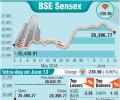
Profit booking by domestic institutional investors weighed on market sentiment.
The recent data dims hope of recovery in manufacturing.
Growth in factory output, as measured by the Index of Industrial Production, was 6.2 per cent in May 2011, according to the official data released on Thursday.

The Nikkei India Services PMI posted above the critical 50.0 level, which separates growth from contraction, for the fourth month running in May.
The country's industrial output growth trickled to 6.2 per cent in October, the lowest this fiscal, on account of a slowdown in manufacturing production.

manufacturing apparently grew at over 5 per cent.

The Pune-based company's chief executive Adar Poonawalla said the company, which is the largest vaccine maker in the world, is putting $200 million at risk by manufacturing nearly 300 million doses before the final nod to launch the vaccine in market, which is expected at best by the end of the year.
India's industrial output contracted by 0.6 per cent in December, 2012 compared to a growth of 2.7 per cent in same month a year ago.
Bumper liquidity as a result of global central bank stimulus measures should prevent a sharper downturn.
